
Publicatie Laka-bibliotheek:
Nuclear Politics. The history of Nuclear Power In Britain
| Auteur | Tony Hall |
| Datum | |
| Classificatie | 2.05.0.00/42 (GROOT-BRITTANNIË - ALGEMEEN) |
| Voorkant | 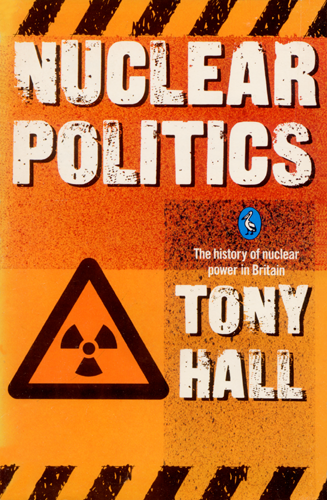 |
Uit de publicatie:
Introduction

The history of nuclear power is littered with the carcasses of false hopes. From the
very beginning, in the forties and fifties, it was proclaimed as the saviour of the
world from the perils of energy shortage. It was a clean source of power. Men in
white coats replaced the hazards faced each day by the miner, and abolished the
environmental impact of dirt and sulphur from the burning of coal.
Few outside the magic circle of atomic scientists understood much about it. But
they were prepared to be captivated by its promise, enthralled by its mystique,
participants in a nuclear religion. When a Labour Minister said of a British reactor
that it promised 'the greatest breakthrough of all time', he showed how much he and
the Government had succumbed to the honeyed words of the nuclear establishment.
Critical faculties appeared in suspension, and the rigorous probing of claims was
deemed unnecessary.
Time and time again much was promised. But an elusive Holy Grail, a 'breakthrough'
in costs that meant nuclear power would be cheaper than coal, was never quite
achieved. And the history of the projects that were actually developed belied the
hopes that were held of them.
The nuclear power industry in Britain was born of the bomb. It was the child of the
same organizations, the same extraordinarily talented people, that spearheaded
Britain's plans to build an independent nuclear arsenal. Its military beginnings to a
large extent shaped the industry and its attitudes. Reactors were built to produce
plutonium and a huge and uniquely privileged establishment was spawned that
gained a momentum of its own. Finance was not a constraint. The main imperative
was to develop projects at great speed.
Deze publicatie is alleen op papier bij Laka beschikbaar, niet als pdf.
Publicaties zijn te leen of informeer of we een kopie kunnen maken. Soms, als we tijd hebben, lukt dat tegen kostprijs van de kopieën.