
Publicatie Laka-bibliotheek:
Nuclear power in the UK (1986)
| Auteur | IEE |
| Datum | december 1986 |
| Classificatie | 2.05.0.00/17 (GROOT-BRITTANNIË - ALGEMEEN) |
| Voorkant | 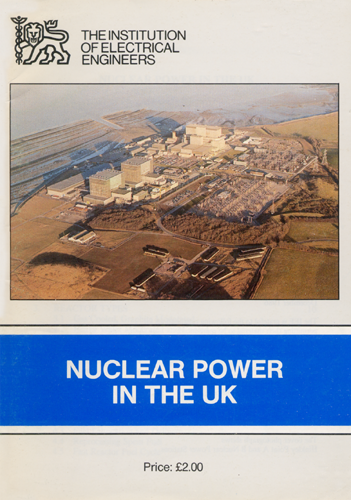 |
Uit de publicatie:
1. INTRODUCTION

Historically the development of industrial Britain up to the 1950s was largely based
on power produced by burning coal. At that time coal accounted for 99% of the fuel
used in electricity generation. This virtually single fuel economy was seen to be
vulnerable to price increases and supply interruption, whilst the developing nuclear
technology and low cost Middle Eastern oil supplies both seemed to offer the
prospects of cheaper electricity and the opportunity of reducing dependence upon
coal.

Both options were taken up, and whilst typically some 75% of electricity is currently
produced from coal, about 18% ofUK electricity is now supplied by nuclear power
stations. The remainder is supplied mainly by oil-fired power stations, with a limited
contribution from gas turbines and hydro plant. Coal is likely to remain the principal
fuel for electricity generation in the UK for many years to come-but nuclear power is
claimed to offer a cheaper source of electricity and would certainly further reduce
dependence upon coal, oil and gas. These fossil fuels are likely in the long run to
become more expensive and less certain in supply. Other potential sources of power
such as the renewables-winds, tides, etc.-are generally at an early stage of
development and their economic contribution and environmental effects are
uncertain at present.

During much of the 1950s and 1960s, the United Kingdom led the world in the
development of civil nuclear power but it now generates less electricity from
nuclear power and has a smaller nuclear industry than several other major industrial
countries. Power stations of the so-called 'Magnox' type have been in operation for
over 20 years whilst of their successors-advanced gas-cooled reactor power stations
(AGRs)-two have been operational for 10 years and others have recently been
commissioned or are nearing completion; see Table 1. Although the UK adopted
gas-cooled reactor systems, most other countries in the world have built water-
cooled reactors. The Central Electricity Generating Board (CEGB) believes that the
pressurised water reactor (PWR) should be established in the UK as a contender for
providing new generating capacity and have applied to build such a reactor system at
Sizewell in Suffolk. It is argued by some others such as the South of Scotland
Electricity Board (SSEB) that the UK should continue to retain the AGR as its main
nuclear reactor system.
Deze publicatie is alleen op papier bij Laka beschikbaar, niet als pdf.
Publicaties zijn te leen of informeer of we een kopie kunnen maken. Soms, als we tijd hebben, lukt dat tegen kostprijs van de kopieën.