
Publication Laka-library:
Power Corrupts. The arguments against nuclear power (1981)
| Author | H.Bacon, J.Valentine |
| Date | 1981 |
| Classification | 6.01.0.00/166 (GENERAL) |
| Front | 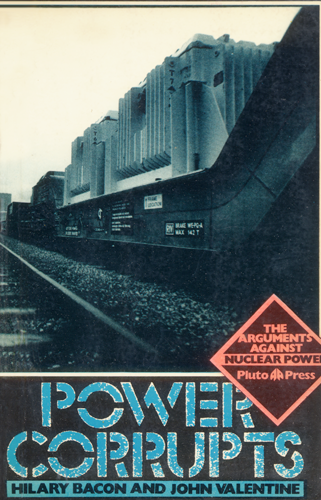 |
From the publication:
Introduction

Nuclear power stations, apart from the hazards they create, produce only electricity.
Electricity alone cannot satisfy our present or future energy needs, and cannot easily
be stored. During the process of generating electricity, nuclear power stations also
generate highly poisonous radioactive waste, a great deal of which has already been
dispersed into our environment. The radiation from this waste causes cancer, genetic
mutations and species degeneration in all living creatures. No safe method has been
found for disposing of this waste. It cannot be destroyed. It lasts for thousands of
years. Research into this urgent problem is only one of the reasons why millions of
pounds of taxpayers' money have been poured - unproductively - into this industry,
which so far generates only 13 per cent of our electricity supply ('File on 4', BBC
Radio 4, 12 December 1979).
Why has the nuclear mountain laboured so expensively and so dangerously to bring
forth this mouse? The answer lies in the military connection. The hidden principal
product of nuclear power stations is plutonium, the lethal radioactive element used
in nuclear weapons and aptly named after the king of the underworld. The production
of military-use plutonium was the original aim of the government when the first
nuclear reactor was built at Calder Hall in 1956-57. Electricity was simply a by-
product. Plutonium is the reason why this highly specialised industry has operated
amid secrecy from the very beginning and also explains the unlimited financial,
technological and ultimately political power granted to it by successive
governments.Yet even with the present relatively small UK nuclear power
programme, the country already has at least 7.5 tonnes of plutonium in excess of
its military demands. This cannot be disposed of (except possibly to countries
anxious to develop their own nuclear weapons), and about 250,000 years will have
to elapse before it decays naturally into harmlessness. But it can be used to produce
more plutonium in the highly explosive and technologically unproved fast-breeder
reactor (FBR) concerning whose development the present government has
expressed enthusiasm.
This publication is only available at Laka on paper, not as pdf.
You can borrow the publication or request a copy. When we're available, this is possible for a small fee.